
“Good things can happen” – Chris’ story
24/02/2026
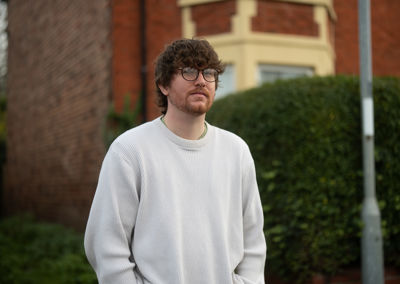
Chris shares his journey with schizoaffective disorder, noting the support from NHS therapy and Rethink Mental Illness’ advice and information service.
I was first diagnosed with psychosis in May 2010, whilst on a year-long industrial placement as part of my undergraduate course in aerospace engineering. My symptoms came in the form of auditory and visual hallucinations, suspicious thoughts, misinterpretation of information around me, and poor memory and concentration. I was hospitalised for a month in the town where I was living during my placement.
My decline in mental health started a few months prior because of high and protracted levels of stress. Having come from a low socio-economic background, I was the first in my family to go to university and was caring for my single mother, who was unemployed and living with a range of mental illnesses herself. I therefore felt I had to prove myself worthy of working in a ‘white collared profession’ like aerospace engineering.
As a child and teenager, I suffered physical, emotional, verbal and sexual abuse, either directly from or through the negligence of my mother. As a result, I developed behavioural and personality characteristics that I felt I needed to change, either through taking on excessive workloads and exercise regimes, or by continuously challenging my natural thought processes.
-
Recovering from a mental health condition does not happen overnight.
I spent the next five years receiving treatment from the NHS in the form of medication, CBT (cognitive behavioural therapy), psychotherapy and visits from CPNs (community psychiatric nurses). When this treatment ended (with agreement from my mental health team), I relapsed and was sectioned under the Mental Health Act, destined to spend another month in hospital. I suffered similar symptoms as before, with the addition of mania, and was diagnosed with schizoaffective disorder.
My recovery from this episode was much more effective. I was put back on medication, initially on a high dose which I reduced under health care guidance because of side effects. I continue to take daily medication today and the side effects are tolerable enough to get on with life. My wife, her family and my close friends provided some great support. They found sources of research, like Rethink’s factsheets and recovery stories, to understand more about my illness and how to maintain good mental health habits.
I ensure I get sufficient rest and exercise, have a good diet, maintain healthy relationships with friends and family. I volunteer, engage in a variety of hobbies and keep daily journals which allow me to regularly reflect on my mental wellbeing. Conversely, I actively avoid bad habits - like binge drinking, drugs, excessive gambling and spending - as well as relationships with people that don’t contribute to a positive mindset.
-
If I focus on today, I believe I am more resilient, confident and satisfied.
Due to these efforts, I have since led a positive and rewarding life. I passed my undergraduate degree with a First Class honours, have completed a Master’s degree, achieved my Chartered Engineering status and have built a rewarding career. I also have a wife and two kids, a great friendship base and regularly participate in triathlons as well as other rewarding volunteering and hobbies.
When I reflect on my mental health, especially from when I was at my worst point, I often cringe at the memory of some of my past behaviours. If I focus on today, I believe I am more resilient, confident and satisfied with where I find myself. I am understanding, supportive and empathetic to others.
My advice to others who are experiencing poor mental health would be to take on guidance from healthcare professionals, like good medication, rest, exercise, diet and social relationships. Actively engage in treatments being offered to you – you never know what will work - and think of the ‘long game’. Recovering from a mental health condition does not happen overnight. It requires effort, patience and practice to learn and adopt new thinking patterns, whilst having to push through some of the darkest moments in life.
Through persistence and faith, improvements will be made, however small, and good things can happen.
You may also be interested in
“We need better care, not worse” – Elizabeth’s story
Elizabeth lives with schizoaffective disorder. She waited over a year for treatment and shares the impact that long waits had on her life.
Read more Read more
“A sense of belonging” – Oliver’s story
Oliver shares his journey with schizoaffective disorder, complex post-traumatic stress disorder (C-PTSD) and Tourette’s. He now plays wheelchair rugby league and has found a sense of belonging amongst his teammates.
Read more Read more