
Taylor's Story
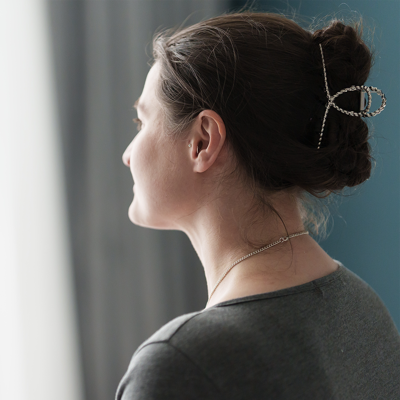
For our Better Care = Safer Care campaign, calling for improved care in mental health settings, Taylor reflects on her experience of being in an inpatient ward when her eating disorder was at its worst.
Trigger and content warning: eating disorder.
I have experience with an eating disorder, OCD (obsessive compulsive disorder) and anxiety. I’ve been in inpatient wards three times since I was 18. Because I was severely malnourished at the time, I was put on one-to-one supervision for 24 hours a day.
What I found in the wards was that the staff were so stretched. When someone needed to be on a one-to-one, we'd get agency workers because there wouldn't be enough staff.
Some staff were really helpful and lovely; on my one-to-ones they’d play games with me to distract me. But I found that most would come into my room and not talk too much. They’d just sit in the room watching me and taking notes, making sure that I was still in bed not harming myself.
I’ve had numerous occasions where I'd be on one-to-one with an agency staff member who‘d fall asleep on shift. This happened a lot. When they’d fall asleep, they didn't actually know what I was doing. This meant that I could engage in my very harmful eating disorder behaviours. Sometimes, whilst they slept, I would abscond, even though I was meant to be on bedrest. They didn't have a clue where I was.
I worked quite hard with my therapist on the ward to make a detailed booklet for staff to get to know me: what helps, which distractions I like. There was a whole section in the booklet of things not to mention, like food, exercise and weight loss. The idea of the booklet was that staff would get to know me and have an insight into my needs.
-
I’ve had numerous occasions where I'd be on one-to-one with an agency staff member who‘d fall asleep on shift. This happened a lot.
But often times, they wouldn't read that. They wouldn't know anything about me. So then they’d come in and ask me things that were very, very uncomfortable. I was very fragile and vulnerable at the time, and they’d talk about my weight or ask why I struggle to eat.
It was almost like they didn't know what ward they were in or their purpose. I don't think they understood what an eating disorder was to begin with because if they did, they wouldn't ask about my tube or why I find it hard to eat or why I’ve got to be in a wheelchair. When I’d ask where they worked before, a lot of the time it would be drug rehabilitation, addiction or acute psychosis wards which are totally different environments.
These people were supposed to be looking after me but they were falling asleep on shift. A lot of the time I felt like if they don't care, then why should I bother? It made it very, very hard to get better. I just felt very isolated. The other patients were able to interact with each other, but the only interaction I was able to have was on these one-to-ones. It made me feel empty.
Looking back now, it's very scary to remember the situations that I was in, with the mind frame that I had. I'm very grateful to be where I am in now, but when I look back, I still feel that same discomfort. I don't know how I handled it - a random person coming into my room every single day, sitting in silence and just taking notes on me or saying things that made my eating disorder worse.
Take action today
Add your name to support safer mental health care. This year, we'll be pushing for improvements to inpatient mental health care and updating you on ways to get involved.