
Sarah's Story
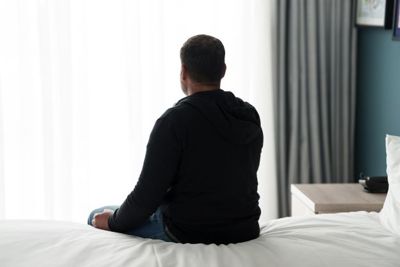
For our Better Care = Safer Care campaign, Sarah shares how she entered inpatient care seeking safety and support, but instead faced instability, poor communication and exclusion from decisions. Having now worked as a patient safety reviewer, she offers a powerful perspective from both sides - showing where care must improve.
No one wants to feel unsafe either psychologically or physically when admitted somewhere that is meant to care for them and treat them when they are experiencing severe mental health symptoms. I was first admitted to an inpatient mental health ward in the wake of a suicide attempt which had led to me needing emergency surgery. I hoped I would find sanctuary there; care, treatment and understanding. I did not.
Instead, right from the beginning, I felt increasingly vulnerable. The high turnover of staff was immediately noticeable. Some were kind and tried their best, but there were so new faces day after day that it was hard to build trust. The reliance on temporary agency staff, and the difficulty retaining permanent staff, meant it was difficult for anyone to get to know me — or for me to feel known, supported, or understood.
After an initial conversation with a hospital psychiatrist where I spoke about my mental health and the events that had led me to attempt suicide, I had very little meaningful contact with staff. Thankfully there was a strong sense of community between the female patients on the ward, a sense of all being in it together which helped me to get through the long empty days on the ward.
The fortnightly ward reviews were another source of anxiety. Decisions about my care sometimes seemed unclear or changed without explanation. I didn’t always understand why certain restrictions were put in place, or why they were lifted. At times, it felt like decisions were made about me, rather than with me.
Discharge was also difficult. Something I longed for to escape the monotony of the ward yet dreaded for fear of how I would survive when back on my own again. When it did eventually happen, it felt rushed and poorly coordinated. No longer deemed a danger to myself, it was as though the hospital wanted to get rid of me as soon as possible.
It was obvious how stretched the system was. Staff were working hard, often under pressure, trying to manage tensions on the ward and keep everyone safe. The environment didn’t feel therapeutic, the focus was on containment rather than recovery, on getting through the shift rather than helping people rebuild their lives. I longed to be seen as a person, I wasn’t even treated as a patient, more a walking, talking risk entity, something to be monitored and graded, rather than cared for, supported and listened to.
-
Right from the beginning, I felt increasingly vulnerable. The high turnover of staff was immediately noticeable. Some were kind and tried their best, but there were so new faces day after day that it was hard to build trust.
But my perspective on safety didn’t end when I left the ward. Determined to make constructive use of my experiences of inpatient mental health care, I began to engage in Patient and Public Involvement work, working to try and improve care for others.
Some years later, I found myself working as a patient safety reviewer. I was involved in reviewing care at the Edenfield Centre following the BBC Panorama documentary which raised concerns regarding patient safety, and later in examining investigations following patient suicides. I came into that work carrying my own lived experience, but also a hope, that by learning from harm, the system would change.
What I found was deeply challenging. Reading investigation reports, a pattern quickly emerged. The same issues I experienced as a patient were present again and again: unclear or incomplete risk assessments, gaps in communication, poor coordination between care teams, and missed opportunities to involve families and carers. Time after time, key information had not been shared, or had been lost during transitions, between wards, between services, or between shifts.
Transitions stood out as particularly vulnerable points. Admission, discharge, leave, and transfer were all points in the patient journey where plans needed to be clear and communication needed to be strong. Too often, they were not. I also saw the devastating impact on families. Many were left with unanswered questions and felt excluded from care and, later, from the investigation process itself. Their insights — so often crucial to understanding what had happened — were not always fully heard or acted upon.
It was impossible to ignore the connection between my own experience and what I was now reviewing. These were not isolated failures. They reflected wider systemic problems: workforce pressures, fragmented communication, and a culture that prioritised immediate risk management over long-term, therapeutic care. Many staff were doing their best in extremely difficult circumstances, but without the right systems and support, even the most dedicated professionals are at a disadvantage.
This is why safer care matters. Safer care is not just about preventing harm in the moment. It means building systems that are reliable, connected, and centred on the individual. It means treating families and carers as partners in care, not outsiders. It means having enough permanent, skilled staff to provide continuity and build trust. And it means accountability — a national way to track safety recommendations so learning leads to action and real improvement.
No one should feel unsafe in a place designed to help them recover. No family should be left wondering whether more could have been done. I have seen this system from two sides: as a patient in need of care, and as a reviewer trying to understand when care has failed. Both experiences lead me to the same conclusion. We know what needs to change. Now we must make sure it does.