
“I have grieved the son I knew” – Deirdre’s story
01/06/2026
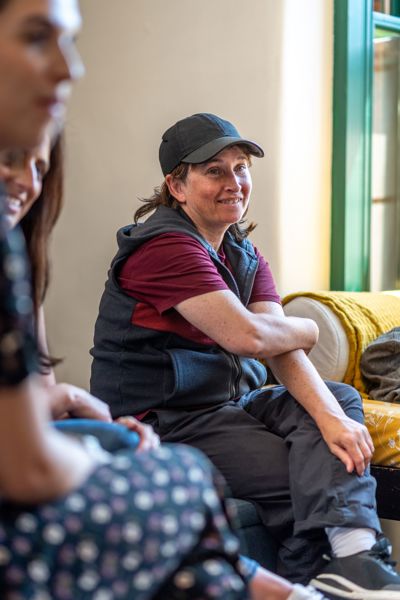
Deirdre has been supporting her son, who lives with schizophrenia, since he was 19. For Carers Week 2026, she reflects on the past 27 years and what has helped her.
Ambiguous grief is a term I came across recently. For some time, I have grieved the son I knew before the onset of this devastating illness. My son had changed, and I have been grieving the future he could have had and the person I knew before.
There is an absence even when he is present. When he has been very unwell, he has been unable to show affection, or remember things in his past life with any accuracy. Memories have become distorted or wiped clean.
This type of grief isn’t understood by others, it isn’t talked about, but it is ever present.
There is no ending, only acceptance. Acceptance that your loved one is changed. Acceptance that he will always need your support.
Creating my own carer-friendly community
I’ve used my art practice to connect with other people like me. I’m working with over 200 women now on ‘The Missing Project’, all of us either mothers, sisters, daughters or wives supporting someone experiencing a mental illness.
We all speak about the loneliness of our loved ones who don’t have friends anymore, their lack of opportunity to engage in meaningful activities, the stigma and lack of understanding of enduring mental illness.
And that sense of isolation affects not just the sufferer, but all those that love and support them.
Financial difficulties
I’m very concerned about possible changes to the benefit system. My son lives on a very tight budget, he can’t afford to go out and visit people. He lives very day-to-day; managing money has always been a big struggle for him, so to have even less…
I’m worried because I know that the lack of money puts extreme pressure on him and has sometimes been the reason for a decline in his mental health.
Navigating crisis
We fought desperately to get my son social housing and when we succeeded the future looked much brighter. However, mental health services were withdrawn. With no support or monitoring, he became desperately unwell.
Ruthless people in the town knew he was vulnerable and would insist on coming into his flat to sleep and take refuge. In the end he fled his flat, rendering himself ‘voluntarily homeless’ and took once more to living in a tent.
I knew he was really unwell, and did my best to alert services, but to no avail.
When I got the phone call early one morning to say he’d been found on a roundabout, bruised, confused and psychotic, I was terrified. He was put on a Section 3 and hospitalised for four months.
It proved to be a positive thing in that he was finally safe, receiving medical help and new medications were being tried in order to get him well again. We were lucky. Things could have ended very differently.
Moving forward
He is living in supported accommodation not far from me. A Section 3 gave him entitlement by law to this level of support.
The new medication means he is functioning better than he has for at least 20 years. I never thought it possible that we’d be able to joke, listen to music, or that he’d accept a hug. We can go to a café together and frequently visit the local market. When he gets paid, he will often buy me flowers and check that I’m ok.
The joy of these simple things are tinged with sadness, though. If he’d been properly monitored and looked after before, so much pain and trauma might have been avoided. He might have kept in contact with his two children. There is no question he has been failed by what is a broken system, but it’s not good to ask ‘What if?’ Much better to stay vigilant, hopeful that there will be no further relapses, grateful for what is.
You may also be interested in

“My mum attempted suicide twice in five years” – Rachel’s story
For Carers Week, Rachel looks back on her mother’s journey with bipolar disorder and how that experience inspired her to create a supportive space for carers.
Read more
My thoughts on PIP – Brian’s story
Brian has been caring for his son, Michael, who lives with schizophrenia. He shares the positive impact of Rethink Mental Illness’ supported accomodation and his concerns about the benefits system.
Read more